
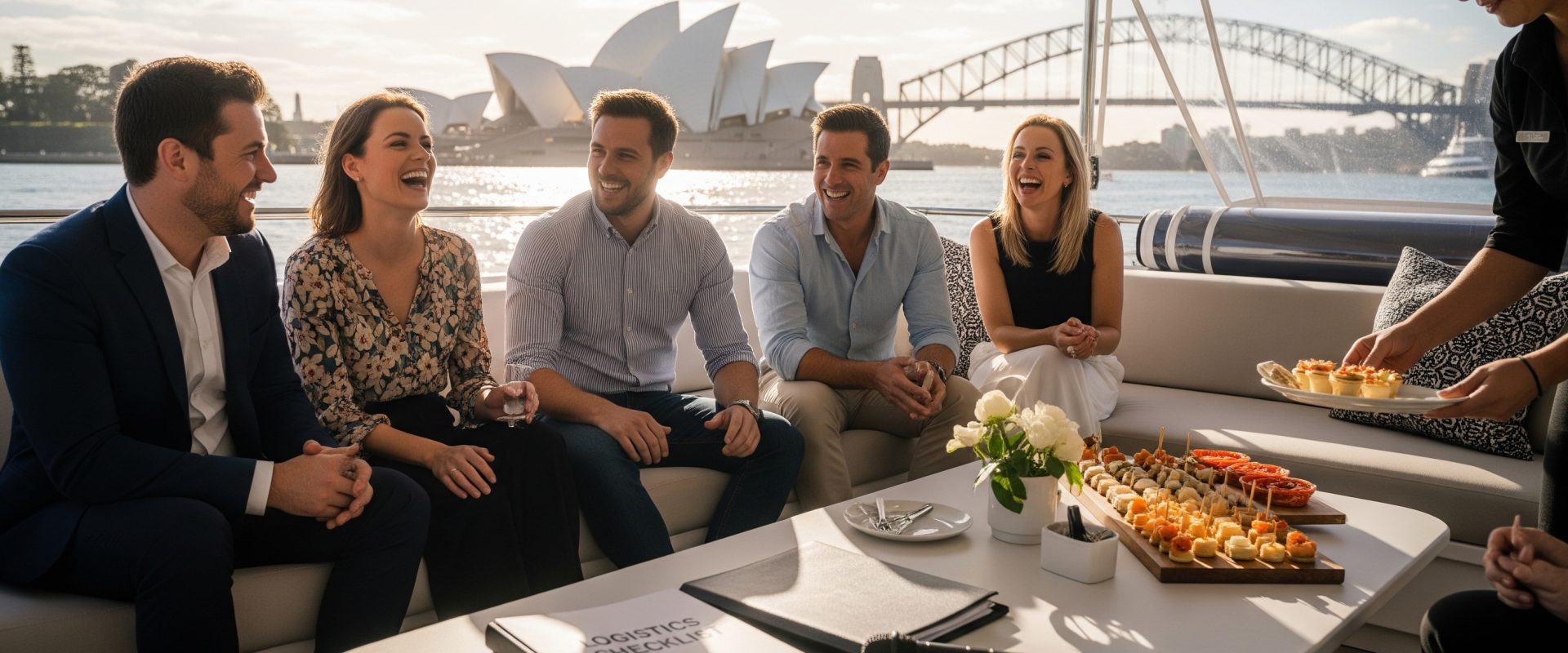
Sydney Harbour Corporate Boat Charter Logistics Checklist for a Smooth On-Water Event
Planning a corporate charter on Sydney Harbour is equal parts wow-factor and logistics. When it runs well, it feels effortless: guests arrive, step aboard, grab a drink, the mic works first go, and the Opera House somehow looks even better at golden hour. When it doesn’t, it’s usually because of one of four things: the wrong boarding point, rushed AV, catering arriving late, or no wet-weather Plan B.
Use this checklist as your practical run sheet for the details that matter most, especially if you’re organising a client function, end-of-financial-year celebration, team cruise, or a product launch on the water. (And if you want a hand matching your event style to the right boat category, start with our Corporate Events page.)
1) Boarding points: pick the wharf like you’d pick the venue
Sydney Harbour has plenty of wharves, but not all are equal for corporate groups. The best boarding point is the one that reduces guest friction: easy to find, close to public transport, and practical for bump-in of catering and any event gear.
Quick wharf checklist
- Access: Is it step-free? How many stairs, ramps, or uneven pontoons are involved?
- Public transport: Is there a train/light rail/ferry nearby, or will guests rely on rideshare?
- Ride-share drop-off: Is there a safe place for cars to stop without chaos?
- Timing: Some wharves are busy at peak commuter times; it can slow boarding.
- Bump-in: Is there a spot to stage catering boxes, florals, signage, or a small AV case?
- Shelter: If it’s drizzling, is there cover nearby while guests wait?
Pro tip: For corporate events, a slightly “boring” boarding point that’s easy is usually better than a glamorous one that’s hard to access. Your guests remember the cruise, not the 12-minute hunt for the right gate.
Boarding and arrival timing that actually works
- Ask guests to arrive 15 minutes early, not 30. Too early means people get restless and start wandering; too late means you’re stuck waiting on the wharf.
- For groups of 30+, consider staggered arrival messaging (especially if you’ve got name check-in or wristbands).
- Nominate one event contact on the wharf with a clear job: greet, check names, direct people, and keep the boarding path clear.
Don’t forget the harbour variables
- Tides and wind can affect how a gangway sits and how comfortable boarding feels.
- The skipper makes the final call on boarding and anchoring choices based on conditions and safety. It’s normal for plans to be adjusted on the day.
If your event includes swimming time as a team “reset” moment (it happens more than you’d think), build your route around protected bays such as Athol Bay, Store Beach, or Quarantine Beach. Conditions decide what’s possible, but those are common favourites when the harbour is behaving.
For route inspiration that pairs nicely with a casual corporate arvo, this one’s a good read: Sydney Harbour Swim - Boat Charter Itinerary: Rose Bay to Nielsen Park & Chowder Bay.
2) AV and mic setup: treat it like a mini production
Most corporate charters need at least one of these: a welcome speech, awards, a short presentation, or a playlist that doesn’t sound like it’s coming from a phone in a cup holder. The key is to confirm what’s onboard early and keep your expectations realistic for a moving venue.
Your AV confirmation questions
Send these to your charter coordinator or ask during planning: - Is there an onboard PA/speaker system suitable for speeches? - Wireless mic or wired mic? If wireless, what batteries does it use and who supplies spares? - Can we connect via Bluetooth, AUX, or USB? - Is there a screen (rare on smaller boats) or any TV display? - Is there power for a laptop, DJ controller, or small lighting? - What’s the noise policy around certain areas and times?
The simple mic plan that avoids feedback and panic
- Do a sound check before guests board if possible, or within the first 10 minutes while people are grabbing a drink.
- Choose the speech location with wind in mind. Upper decks are magic for views, but wind can swallow your audio.
- Keep speeches short and punchy. On-water attention spans are… coastal.
- If you’re running awards: have one person as the “mic runner” so it’s not being passed around like a hot potato.
Pro tip: If speeches are mission-critical (client announcements, formal awards), consider a boat with a more enclosed main saloon or all-weather layout. Covered space makes audio clearer, and it keeps your program stable if weather turns.
Music: the hidden make-or-break
For corporate events, music is often the vibe glue between formal moments. Decide early: - Background playlist only? - DJ or live musician? - A “peak moment” set after speeches?
If you’re bringing a DJ, confirm bump-in time, space, and power. Also ask where they can safely set up so they’re not fighting spray, sun glare, or foot traffic.
3) Catering timelines: build backward from departure, not from hunger
Catering on a boat is all about timing and temperature. Whether you’re doing canapés, a buffet, or a seated meal, your best friend is a realistic schedule that works with boarding, cruising, and any presentation moments.
A reliable 4-hour corporate charter catering flow
- 0:00 to 0:20: Boarding + welcome drink (keep it simple, low-mess)
- 0:20 to 1:30: Canapés or grazing service (people mingle, views are fresh)
- 1:30 to 2:00: Speeches/awards (short, planned, mic checked)
- 2:00 to 3:15: Main food service (buffet, substantial canapés, or meal)
- 3:15 to 4:00: Dessert, coffee, final drinks, photos, gentle wrap-up
This structure works because it doesn’t force a full meal during the most scenic “everyone’s outside” part of the cruise. It also gives you a clean window for speeches before the dance floor energy kicks in.
Catering logistics checklist
- Final numbers deadline: lock it in early and communicate clearly.
- Dietaries: collect them in one place; send a single consolidated list.
- Service style: buffet needs stable table space; canapés need staff flow.
- Cake: if you’re doing a milestone celebration style corporate event, confirm storage and cutting (and who supplies plates/knife).
- Esky rules: if you’re BYO, confirm what you can bring, how it’s stored, and who handles ice.
- Waste and packaging: ask what the boat can manage onboard; keep it minimal.
Pro tip: If your event has a formal agenda, avoid messy foods early on. Saucy sliders and white shirts don’t mix, especially when someone’s leaning over the rail for the Harbour Bridge photo.
If you’re the kind of organiser who loves a proper run sheet, our birthday version is surprisingly transferable to corporate timing: Sydney Harbour Birthday Cruise Run Sheet.
4) Wet-weather backup options: plan for “grey” not “cancelled”
Sydney weather likes to keep you humble. The good news: most corporate charters don’t need to be cancelled for rain. They just need a smarter plan.
Choose the right boat category for the forecast
- Catamarans: stable, spacious, and often have good covered areas; great for mixed groups and networking.
- Luxury motor cruisers: ideal when you want a premium feel plus comfortable interior space for presentations and service.
- Party boats and larger event vessels: strong for bigger groups, with dedicated areas for food, speeches, and dancing.
If you know you’re scheduling a winter date or a shoulder-season afternoon, prioritise covered entertaining space and a layout that doesn’t force everyone onto one narrow indoor deck.
Wet-weather route thinking
Rain is manageable; wind is the bigger factor. In wet weather, skippers often favour more protected water and scenic passes that still feel special.
Common wet-weather-friendly ideas include: - Cruising past the Opera House and Harbour Bridge when visibility allows - Spending more time in sheltered bays - Shorter “open water” legs to keep people comfortable (and drinks upright)
For a deeper wet-weather plan that’s made for Sydney, keep this handy: Sydney Harbour Rainy-Day Charter Plan: Covered Boats, Wet-Weather Routes, and Easy Dockside Stops.
Dockside stops as a Plan B
If your event includes a key moment (client presentation, formal awards, important speech), it can be worth building in the option of a dockside pause. It steadies the environment, reduces wind noise, and helps your AV behave.
Just remember: wharf availability can change, and the skipper will confirm what’s safe and permitted.
5) The final 48 hours: the calm, boring checks that save the day
This is the part that separates a smooth corporate charter from a “why is the mic not working” situation.
48-hour checklist
- Confirm boarding point and send a simple map pin to guests
- Send a tight arrival message: time, what to bring, footwear guidance
- Lock in final numbers and dietaries with catering
- Confirm AV inputs (Bluetooth/AUX) and who brings adapters
- Assign roles: wharf contact, mic runner, gift/award handler
- Prepare a wet-weather note to guests (jackets recommended, event still on)
- Reconfirm any must-haves: signage, branded items, photographer timing
Pro tip: If you’re doing branded moments (step-and-repeat, flags, product display), keep it lightweight and wind-proof. Sydney Harbour breezes love a loose banner.
6) A quick note on safety and comfort
Corporate events are meant to feel effortless, but boats are still boats. Encourage sensible footwear, keep walkways clear, and make sure your team respects crew instructions, especially during boarding and docking.
If you’re sharing guest info ahead of time, it’s worth linking to practical guidance like our Safety and FAQs pages so everyone knows what to expect.
Ready to turn the checklist into a charter plan?
Boat Hire Australia connects you with premium Sydney Harbour vessels across catamarans, luxury cruisers, sailing yachts, and large event boats, with crews who do this every week and know the wharves, timing, and harbour quirks. Explore Sydney or head straight to Corporate Events and tell us your date, guest count, and vibe. Popular dates and the best boats book out early, especially from October through March, so it’s worth starting the conversation sooner than you think.